
My pet needs surgery: common questions
Allgemein
October 28, 2018
What happens when my pet has an operation?
Your vet has diagnosed a condition that requires surgery. What will happen to your animal, and how can you prepare?
As in human medicine, veterinary surgery usually takes place under anaesthesia. Your pet is unconscious and receives medication to manage pain.
Every anaesthetic involves some risk. Your vet will explain the individual risks and how the team aims to reduce them before the procedure.
Follow the fasting and drinking instructions given specifically for your pet by the veterinary team. These can differ according to the animal and the planned procedure.
Fasting matters because some anaesthetic medicines can cause vomiting. If an animal vomits during anaesthesia, stomach contents may enter the airways or lungs while protective reflexes are reduced.
On the day of surgery
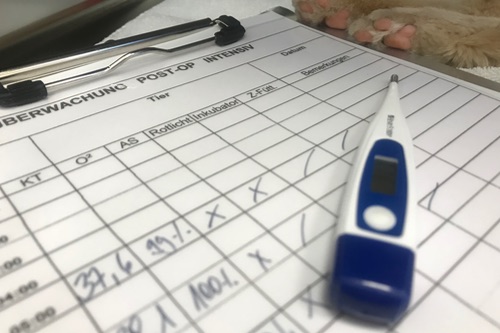
On arrival, the team will receive your pet and repeat a general examination. The animal is then taken to the operating area. A venous catheter is placed and the anaesthetic is started. A monitor is used to check vital signs throughout the operation. Afterwards, your pet is watched closely in the recovery area. After routine procedures, many animals can go home the same day.
What should I do after surgery?
Your pet will need rest and a quiet place to recover. Do not allow it to lick or chew the wound; a protective collar may be needed. Mild redness or swelling around the wound can occur, but contact the practice if it becomes pronounced or you are concerned. The team will tell you when any skin stitches should be removed and what other aftercare is needed. If in doubt, call us: we are available around the clock.