
Grass awns in dogs: what to check after a walk in Berlin
Allgemein
November 18, 2025
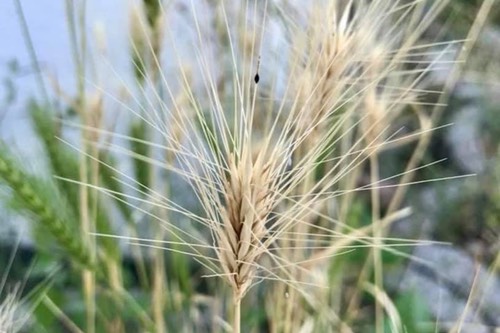
Grass awns are the dry, arrow-shaped seed heads of grasses and cereals. Especially in summer, they easily catch in the coat during walks and can lodge in paws, ears, the nose or the eyes. Here you can read how to check your dog after a walk, which signs to look out for and when an examination at our practice in Reinickendorf makes sense.
Why grass awns are so treacherous
Seen up close, a grass awn looks like a tiny arrow whose fine barbs all point backwards. When your dog brushes through a meadow or dense undergrowth, it gets caught in the coat. Every step, every scratch and every shake then pushes it a little further towards the skin – it cannot move back. Once the tip reaches the skin, it can bore into it. In the ear it travels towards the eardrum; in the eye it irritates the conjunctiva and cornea.
The after-walk check, step by step
Check your dog after every walk through long grass or along verges:
- Feel the spaces between the toes of each paw.
- Check the armpits and the coat.
- Take a close look at the ears and eyes.
Carefully remove loose plant parts from the coat. If an awn is already stuck in the skin, ear or nose, please do not try to remove it yourself or search for it blindly with tweezers: this can injure your dog or push the awn even deeper. During awn season, it is best to avoid tall, dry grassland. You will find more tips on checking paws in our article Paw care for dogs.
Signs you should take seriously
The symptoms depend on where the awn is lodged:
- Paw and toes: your dog keeps licking the same spot, limps, or the paw swells.
- Ear: your dog suddenly shakes its head, scratches its ear or holds its head tilted. If the awn stays in the ear canal, inflammation and, in the worst case, an injured eardrum can result.
- Eye: your dog squints, the eye is red or swollen. This can be caused by painful conjunctivitis or an injured cornea.
- Nose: violent sneezing, nasal discharge or even nosebleeds.
What we do at the practice
Because our practice on Scharnweberstraße is open around the clock, you can come to us if you suspect a grass awn, even in the evening or at the weekend. A quick phone call helps us prepare. We first examine the affected area – if we suspect an awn in the ear, using an otoscope. If the foreign body sits deep or your dog is very sensitive to pain, a short sedation or anaesthetic may be needed so that we can remove the awn completely and gently. Tell us when and where the symptoms started – it helps with the search. You will find all the ways to reach us on our contact page.
Frequently asked questions about grass awns
Can I pull out a grass awn myself?
Only if it is lying loosely in the coat. As soon as it is stuck in the skin, ear, nose or eye, removal belongs in a vet’s hands.
Can cats be affected too?
Yes. Grass awns can also lodge in cats’ fur, especially in outdoor cats. So check your cat in the same way after it has been outside.
Does trimming the fur between the toes help?
In dogs with long coats, regularly trimming the fur on the paws can help. It does not replace the check after each walk.
Should I come at night if I suspect a grass awn?
If your dog keeps shaking its head, sneezes violently or squints, do not wait. The earlier an awn is removed, the lower the risk of inflammation and lasting damage. There is always a vet at our practice, around the clock.
Suspect a grass awn? Call us on 030 / 412 73 57 – our veterinary practice at Scharnweberstraße 136 is open 24 hours a day, including Sundays and public holidays. An overview of our emergency care can be found under Services.